
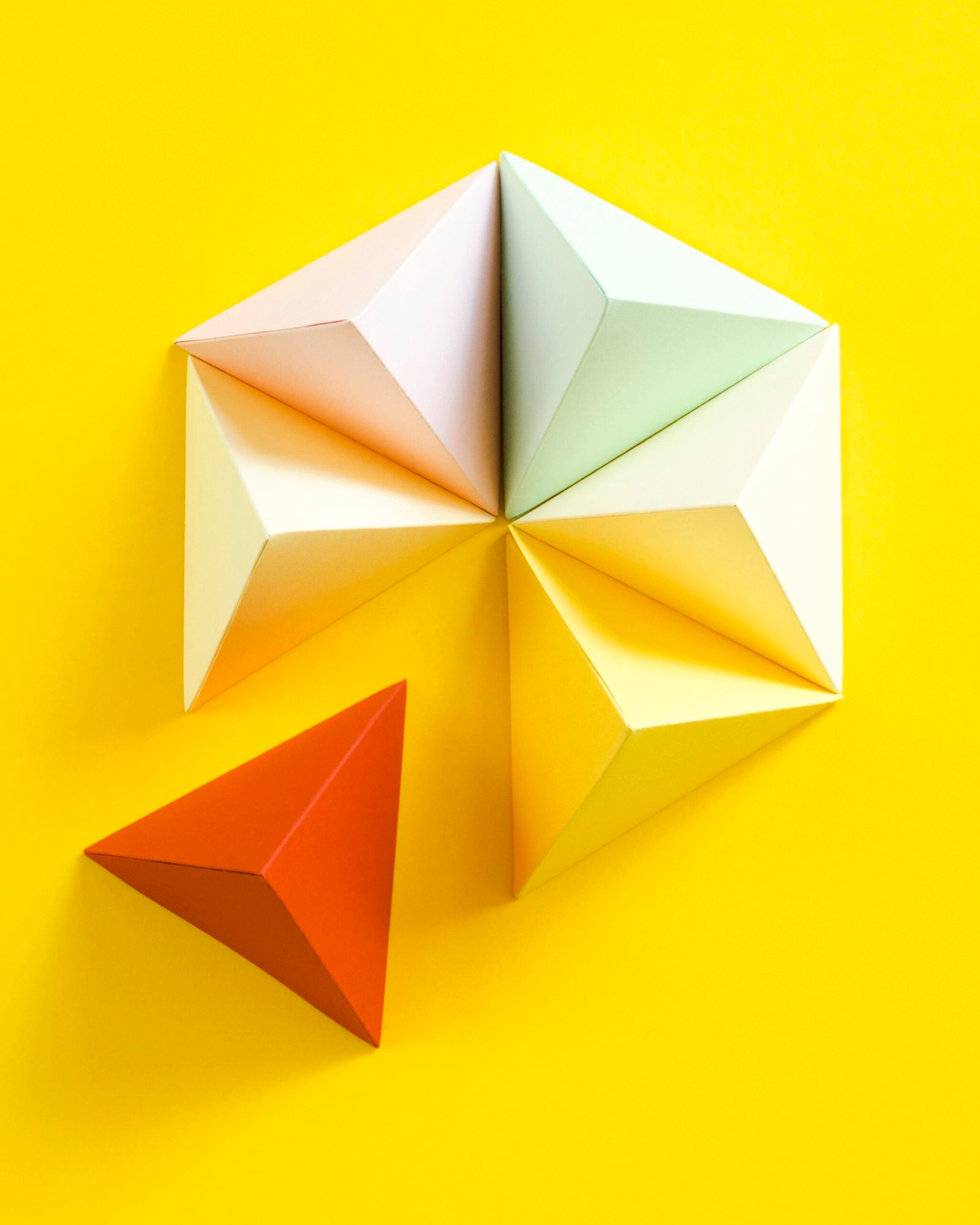
Most people see a sheet of paper.
I see a mathematical landscape waiting to unfold.
Origami has travelled a fascinating journey over centuries. While many associate it with colourful cranes, decorative flowers or children’s craft sessions, contemporary origami has evolved into something far more profound. Today, it influences architecture, robotics, aerospace engineering, medical devices, computational geometry and industrial design.
For me, origami is a way of thinking.
Every fold is a decision.
Every crease represents a relationship.
Every pattern reveals an underlying mathematical order.
As an architect and educator, I constantly search for ways to help students understand complexity. Buildings are not merely collections of walls and roofs; they are systems of structure, light, movement, proportion and human behaviour. Surprisingly, a simple square sheet of paper contains many of these ideas.
When students fold, they begin to recognise symmetry, transformation, hierarchy, modularity and geometry—not as abstract concepts found in textbooks, but as experiences felt in their own hands.
This is why my workshops rarely begin with the question, “Can you fold this model?”
Instead, they begin with another question. “What happens if we change one fold?” That single change can alter the entire system. Design works exactly the same way. Whether we are designing a building, a product, an urban space or a business strategy, every decision influences everything else.
Origami teaches us to think systematically.
It rewards patience instead of speed.
It encourages experimentation rather than perfection.
It demonstrates that constraints often generate the most beautiful solutions.
The paper itself never changes. Only our understanding of it does.
In many ways, creativity is exactly that.
The world remains the same. The designer learns to see new possibilities.
This is why I describe origami not as an art of folding paper, but as an art of unfolding thought.
It is a language where mathematics becomes tangible, geometry becomes intuitive and imagination becomes visible.
That is the journey I invite participants to experience—not simply learning folds, but learning to think differently.